AI Automation
Deploying Custom LLM AI Agents to Transform Customer Success in the GCC
By Rana Sami Ullah • February 2026

Table of Contents
- From Scripted Chatbots to Agents That Read the Account
- Grounding the Model in Your Own Knowledge Base
- Maintaining Multilingual Context (Arabic & English)
- Automated Lead Qualification Workflows Using n8n
- An Abu Dhabi deployment, in detail
- The actions an agent should and should not take
- Arabic and English, in practice
- Measuring whether it works
- Cost, and what to expect
- Where to start
- What the managers say after three months
Customer success teams across the Gulf are drowning in the same inbox: renewal questions, onboarding requests, billing queries and support tickets, in Arabic and English, often in the same thread. Scripted chatbots have not helped, because customers do not follow scripts. This article describes how we deploy LLM agents that read the account, reason about the request and act, with a person a handoff away.
From Scripted Chatbots to Agents That Read the Account
A decision-tree bot asks the customer to pick from a menu and fails the moment the request is not on it. An LLM agent reads the message, looks up the account, works out what is being asked, and either answers, acts within its limits, or hands off to a person with the context attached.
Grounding the Model in Your Own Knowledge Base
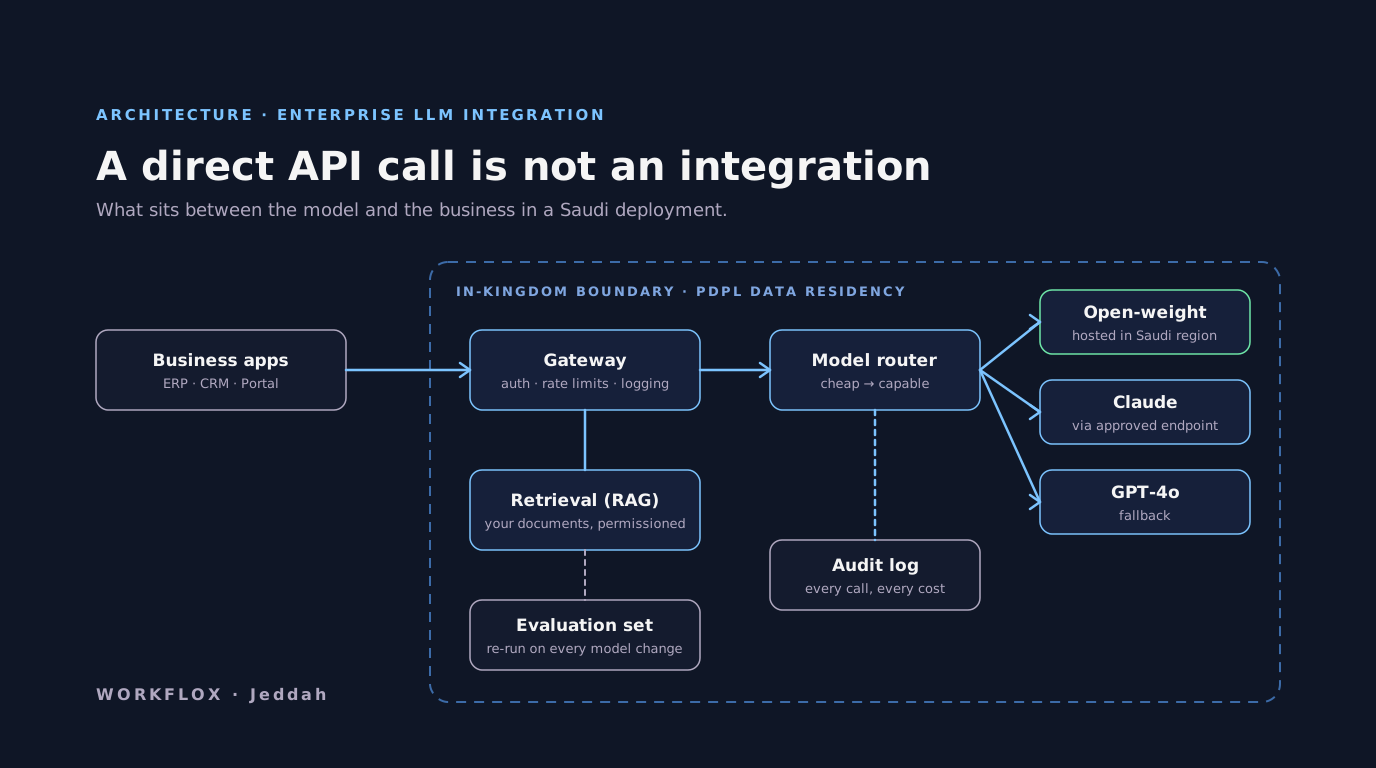
Nothing is trained. The model stays as the provider shipped it, and the agent retrieves the relevant passages from your manuals, past tickets and ERP records at the moment of each question, so the answer is drawn from your approved content and can be traced back to it.
Maintaining Multilingual Context (Arabic & English)
In Dubai and Abu Dhabi, smooth context switching between Arabic and English is mandatory. The agent has to keep the thread's context whichever language each message arrives in, and it has to be tested on real mixed-language transcripts rather than assumed to cope.
Automated Lead Qualification Workflows Using n8n
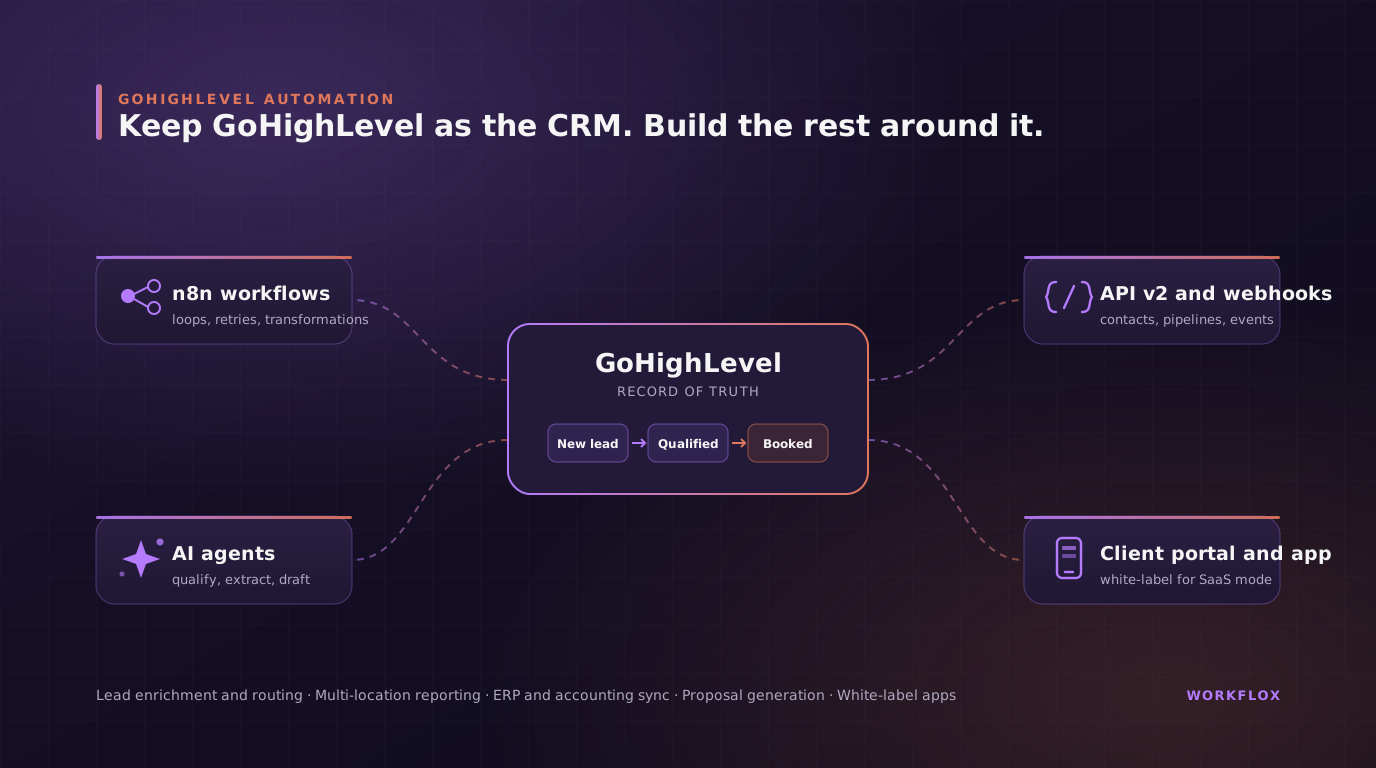
When a B2B prospect engages with your AI agent, it doesn't just answer questions. It triggers an n8n workflow to qualify the lead, scores their intent, and routes high-value prospects directly to a human sales director's WhatsApp or Slack. Smoothly integrate cognitive bots into your tech stack by working with senior custom AI developers in Dubai .
An Abu Dhabi deployment, in detail
A software company in Abu Dhabi with about four hundred business customers had two customer success managers and an inbox that grew faster than they could read it. Roughly half the messages were renewal questions, invoice requests and onboarding how-tos, most answerable from the account record and the help centre. We built an agent that reads each incoming message, pulls the account's plan, renewal date and open tickets, answers what it can from approved content, and drafts a reply for anything involving pricing or a commitment, which a manager approves with one click. Complaints and cancellation threats go straight to a person with a summary. The managers now spend their mornings on the accounts that are at risk rather than on invoice requests, and renewal conversations start six weeks earlier because the agent flags them.
The actions an agent should and should not take
The list matters more than the model. Reading the account, the help centre and past tickets: always. Sending a factual answer that cites approved content: yes, above a confidence threshold. Drafting a reply about pricing, renewals or contract terms: yes, but a person sends it. Updating a ticket status, scheduling a call, or sending an invoice copy: yes, with the action logged. Issuing a credit, changing a plan or promising a feature: never without a person. We write this list with the customer success lead before the build, and the agent's credentials are scoped to it. When the list changes, the scope changes with it.
Arabic and English, in practice
Customers in the UAE and Saudi Arabia switch languages inside a single message, and business customers often write in English while their finance teams write in Arabic. The agent has to keep the thread's context regardless. The evaluation set we build before launch includes real threads with both languages, formal and dialect Arabic, and the abbreviations people actually use. The retrieval layer is tested for cross-language recall, so an Arabic question finds an English help article and the reverse. And the tone is set per language, because a reply that reads as polite in English can read as curt in Arabic.
Measuring whether it works
Four numbers, tracked from the first week. The share of messages resolved without a person. The share of drafted replies a manager sent unchanged, which measures how much the agent can be trusted. Time from a customer's first message to a useful reply. And the number of at-risk accounts flagged before the customer raised the issue. The first number is the one vendors quote; the fourth is the one that pays for the project. A deployment that resolves forty percent of messages and surfaces every at-risk renewal a month early is a success by any measure that matters to a customer success lead.
Cost, and what to expect
An agent grounded in your help centre and account data, with drafting and approval for sensitive replies and a handoff to a person, runs AED 14,500 to 36,500 with us and ships in six to ten weeks. Adding actions in your ticketing, billing and CRM systems and a review dashboard moves the range to AED 49,500 to 150,000. Model usage for a team of this size is usually a few hundred dirhams a month once routing is in place. A monthly retainer covers reviewing conversations, updating the knowledge base and re-running the evaluation when the model provider changes something, and a vendor who does not propose one is planning to leave after launch.
Where to start
Export a month of the inbox. Sort it by what the customer wanted. Count. The intents at the top of that list, the ones that can be answered from the account record and approved content, are the first release. The ones that need a decision are the second, with drafting and approval. The ones that need a conversation stay with people. That sorting takes a day and it sets the scope, the price and the expectations for the whole project. Vendors who quote without it are quoting for a demo.
What the managers say after three months
The consistent comment is not about the time saved, though that is real. It is that they know what is in the inbox. Before the agent, an at-risk account could sit unread for a week behind invoice requests. After, every message is read, classified and either answered or surfaced within minutes, so the manager's morning starts with the five conversations that need a person rather than the fifty that did not. The agent's value is not that it replaces the customer success manager. It is that it makes their attention go where it should.
If your customer success inbox is where renewals go to wait, an agent grounded in your own account data is a bounded project, not a moonshot. Start with the deflection baseline and we will scope from there.
Frequently Asked Questions
How is an LLM agent different from the chatbot we already have?
A scripted chatbot follows a decision tree and fails outside it. An LLM agent reads your knowledge base and account data, reasons about the customer's actual request, takes bounded actions such as updating a ticket or scheduling a call, and hands off to a person with the context attached when confidence is low.
Can the agent work in Arabic and English within one conversation?
Yes. Customers across the GCC switch between the two mid-thread, so the agent is evaluated on mixed-language transcripts before launch and keeps the conversation's context regardless of which language each message uses.
How do you stop the agent giving wrong answers to customers?
Retrieval grounded in your own approved content, a confidence threshold below which the agent escalates rather than answers, an evaluation set of real conversations scored before launch, and logging of every answer so a wrong one can be traced to its source and fixed.
Related Articles