Pricing & Strategy
What AI App Development Costs in Australia (2026, in AUD)
By Muhammad Usman • October 2026
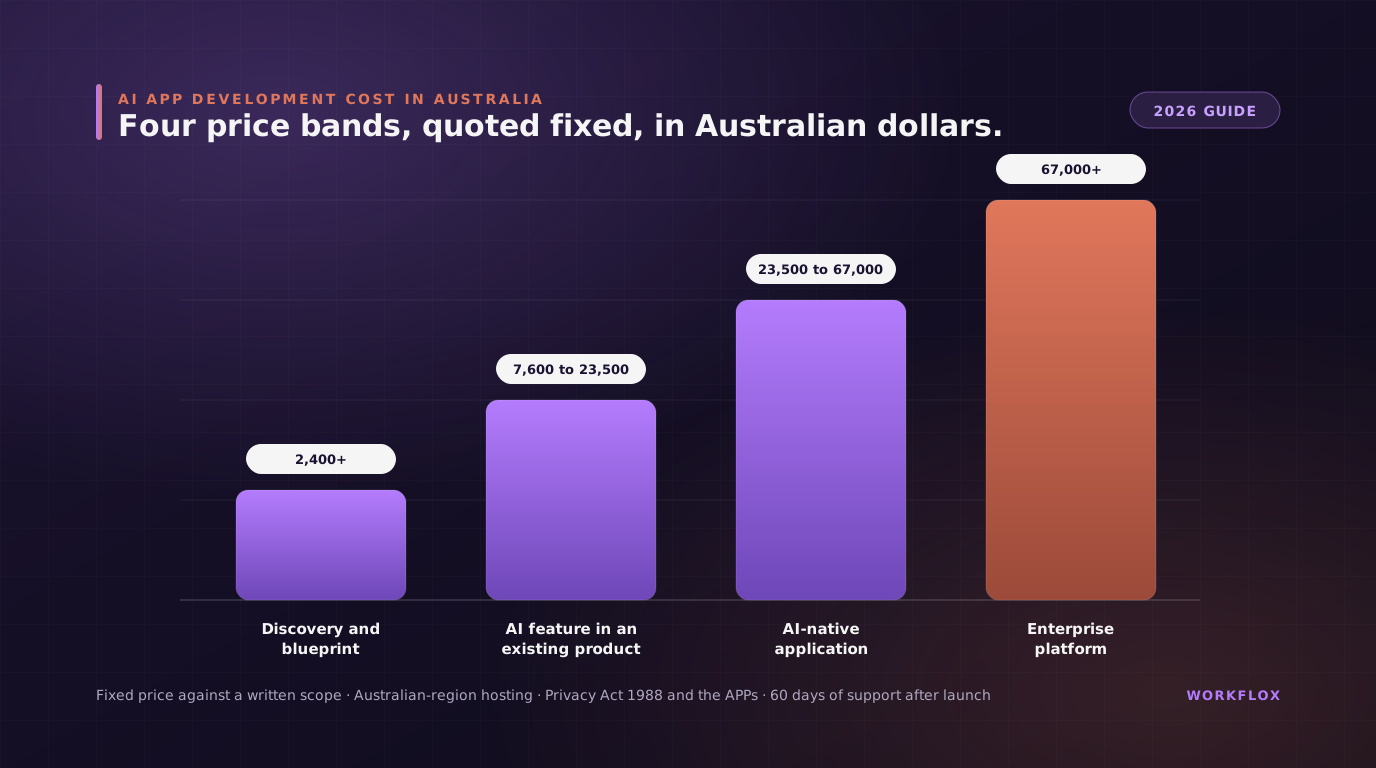
Table of Contents
Ask three Australian agencies to quote an AI feature and you will get three numbers that differ by a factor of five, each with a confident explanation. The scope descriptions look alike. The difference is in what each quote assumes about your data, your integrations and who is doing the work.
This guide sets out what AI app development costs in Australia in 2026, in Australian dollars, quoted fixed rather than by the hour. The bands come from our own price list, which is the same list we quote from, and the drivers come from the projects behind it. Where a cost appears after launch rather than in the quote, it is called out.
The short answer
For a business that wants a number before the detail:
Product discovery and a build-ready blueprint, including wireframes, a clickable prototype and a written specification, starts from AUD 2,400 and takes about three weeks.
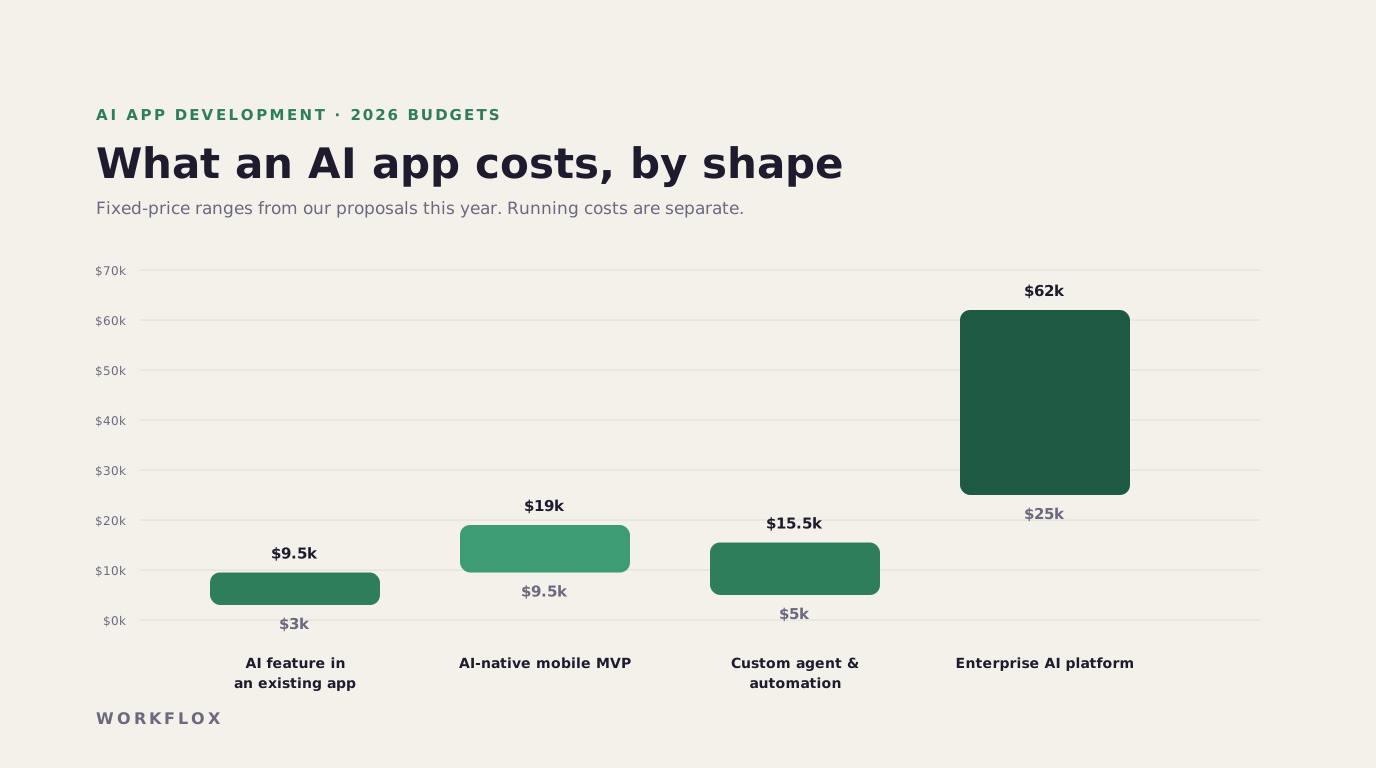
Adding one AI feature to a product you already run, such as semantic search, a grounded assistant or document extraction, typically costs AUD 7,600 to 23,500 and takes six to ten weeks.
An AI-native application built from scratch, with accounts, a retrieval layer and integrations, runs AUD 23,500 to 67,000 over eight to twenty weeks.
A focused AI agent or chatbot handling one workflow is AUD 6,100 to 15,000. Multi-step agents working across several systems are AUD 20,500 to 62,500.
Enterprise platforms with private hosting, single sign-on, audit logging and a compliance review start beyond AUD 67,000 and are scoped per project.
Every band is a fixed price against a written scope. The rest of this guide explains what moves a project within its band, and what pushes it into the next one.
Why Australian quotes vary so much
Three things explain most of the spread.
Hourly versus fixed pricing. Australian agencies commonly charge AUD 150 to 250 per hour. At those rates, a modest AI feature passes AUD 60,000 before the first release, and the final number is only known at the end. A fixed quote moves the estimation risk to the agency, which is why the agency has to scope carefully before naming a price.
Senior versus junior time. AI projects fail on judgement calls: which model, how to chunk documents, what to do when the model is unsure. An agency that puts a senior engineer on those decisions and a smaller team on the rest costs less than one that bills a large team at a blended rate, and ships something that works.
Assumptions about your data. A quote that assumes clean, labelled, accessible data is cheap on paper. The first fortnight of most AI projects is spent discovering that the data is in four systems, two of them exports from a PDF. Ask every vendor what their quote assumes about data readiness.
Cost by type of AI application
An AI feature inside an existing product (AUD 7,600 to 23,500). The lower end is a single capability with one data source: search over a help centre, summarisation of a record, extraction from one document type. The upper end adds retrieval over several sources, an evaluation set run on every change, and usage controls so the feature cannot run up an unbounded model bill.
An AI-native application (AUD 23,500 to 67,000). This is a product where the AI is the point, not an add-on. The cost is driven by how many user roles it serves, how many systems it reads from and writes to, and whether it needs billing and multi-tenant accounts from day one. A single-role internal tool sits at the bottom of the band. A customer-facing product with subscriptions sits at the top.
Agents and chatbots (AUD 6,100 to 15,000 focused; AUD 20,500 to 62,500 multi-step). A focused agent does one job: qualifying leads, triaging support tickets, answering questions from your own content on one channel. The multi-step band is for agents that plan across several actions, call several tools and need an admin interface for review and overrides. Our AI agent development page sets out what each level includes.
Enterprise platforms (AUD 67,000 and up). Private or Australian-region hosting, SSO, audit logging, security documentation for your review team and several AI capabilities on shared infrastructure. These always begin with a paid scoping phase, because the integration surface is what sets the price, and nobody knows it until it is mapped.
What drives the number
Data readiness is the largest driver. Clean data in one system with an API is the cheap case. Data spread across systems, in inconsistent formats, or locked in documents adds weeks of pipeline work before any model is involved.
Integrations come second. Each system the application reads from or writes to adds scope, testing and failure handling. Five integrations are not five times one; they are more, because the failure modes multiply.
User roles matter more than screen count. A product with three roles and strict permissions costs more than one with ten screens and one role. Screen counts are a poor predictor and a common cause of underestimates.
Compliance is the fourth. Applications handling personal information in Australia are built around the Privacy Act 1988 and the Australian Privacy Principles. That usually means Australian-region hosting, a clear record of what data the model sees, and retention rules. Health, finance and government work carries sector requirements on top. None of this is exotic, but it has to be designed in, and it is cheaper designed in than retrofitted.
Evaluation is the fifth, and the one most quotes leave out. An AI feature with no evaluation set is a demo. Building the set from real examples, running it on every change and tracking accuracy over time is real work and should appear in the scope.
Running costs after launch
The build price is not the full cost of ownership. Three recurring items apply.
Model inference is volume-driven. A focused feature with moderate traffic typically runs AUD 300 to 1,500 a month. Heavier products run more. Routing simple steps to a smaller model and reserving a frontier model for genuine reasoning commonly halves this, and it should be designed in from the start.
Hosting in an Australian region, where required, typically runs AUD 200 to 1,500 a month depending on traffic and whether a vector database is involved.
Maintenance covers model updates, retrieval refreshes and monitoring. Budget 10 to 20 percent of the build cost per year, or a monthly support plan.
Local agency or offshore partner on Australian hours
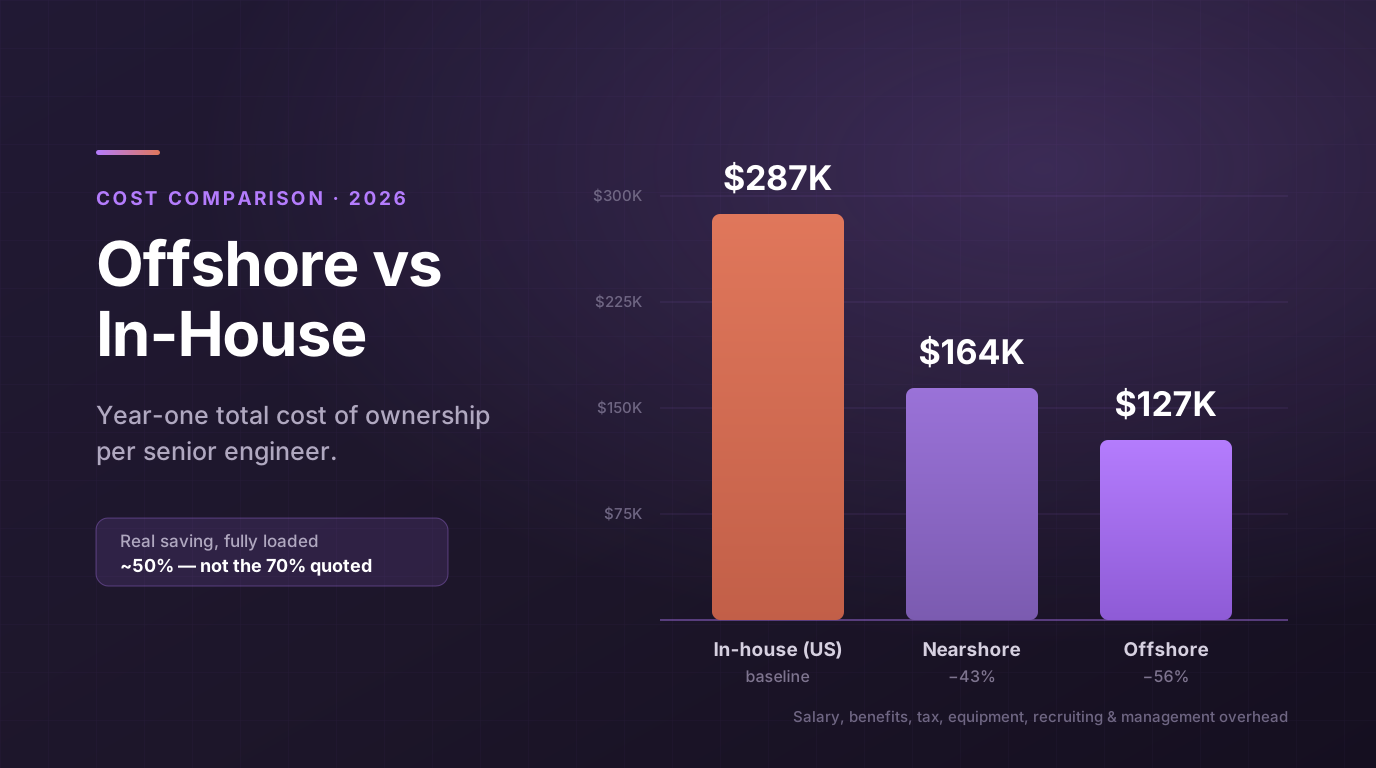
The honest comparison is not local versus offshore; it is who does the work and when. A senior team working inside AEST and AEDT business hours, with standups on your calendar and code you own from day one, delivers the same outcome as a Sydney agency at a fixed price that is usually 50 to 70 percent lower. The trade-off is that you cannot walk into the office. For most product teams, a daily call and a shared Slack channel are a fair exchange.
Our AI application development company in Australia page covers how we work with Sydney, Melbourne, Brisbane and Perth teams, including hosting, hours and the Privacy Act.
Timelines
Discovery and blueprint: about three weeks. A focused AI feature: six to ten weeks. An AI-native application: eight to twenty weeks, with data readiness and integration count setting the length. A focused agent: four to six weeks. Enterprise platforms: scoped per project, commonly four to six months.
The step that most often extends a timeline is not engineering. It is access: to data, to systems and to the person who can approve what the AI is allowed to do.
How to get a fixed quote
Bring three things to the first conversation. A one-paragraph description of what the application should do for whom. A list of the systems it must connect to and whether each has an API. And a sample of the real data it will work with, including the messy examples.
With those, a fixed quote in AUD against a written scope takes about a week. Our packages page shows the standard bands, and the AI app development cost guide covers the same drivers in more depth for readers outside Australia.
Frequently Asked Questions
How much does AI app development cost in Australia?
In 2026, adding a focused AI feature to an existing product typically costs AUD 7,600 to 23,500. An AI-native application built from scratch runs AUD 23,500 to 67,000. A focused AI agent or chatbot is AUD 6,100 to 15,000, and multi-step agents are AUD 20,500 to 62,500. Enterprise platforms start beyond AUD 67,000. These are fixed-price bands against a written scope.
Why do Australian agencies quote AUD 60,000 or more for a small AI feature?
Most quote by the hour at AUD 150 to 250, so a modest feature reaches that figure before the first release, and the final number is only known at the end. A fixed quote moves the estimation risk to the vendor, which is why careful scoping comes before the price.
What are the ongoing costs of an AI application?
Model inference, which is volume-driven and typically AUD 300 to 1,500 a month for a focused feature; Australian-region hosting at AUD 200 to 1,500 a month depending on traffic; and maintenance at roughly 10 to 20 percent of the build cost per year, or a monthly support plan.
Does the application need to comply with the Privacy Act?
Any application handling personal information in Australia is built around the Privacy Act 1988 and the Australian Privacy Principles. In practice that means Australian-region hosting where required, a clear record of what data the model sees, defined retention, and sector rules on top for health, finance and government work.
How long does an AI app take to build?
A focused AI feature takes six to ten weeks. An AI-native application takes eight to twenty weeks depending on data readiness and integrations. A focused agent takes four to six weeks. Discovery and a build-ready blueprint take about three weeks and are the fastest way to get a reliable fixed quote.