AI & Society
AI, Broken Trust, and the New Gods of Silicon Valley: Key Takeaways from Scott Galloway on The Diary of a CEO
By Muhammad Usman • May 2026

Table of Contents
- The Two Biggest "Brand Collapses" of the Last 18 Months
- Is AI Actually Destroying Jobs?
- Sam Altman, Elon Musk, and the "New Jesus Christ" Problem
- The Billionaire "Go-Bag" Phenomenon
- The Real Skills of the Future
- The Middle East, Misplaced Confidence, and "Strategic Incompetence"
- Where's the Value Right Now?
- The Personal Side: Fatherhood, Grief, and Purpose
- Source & Credit
- Our take
- Source & Credit
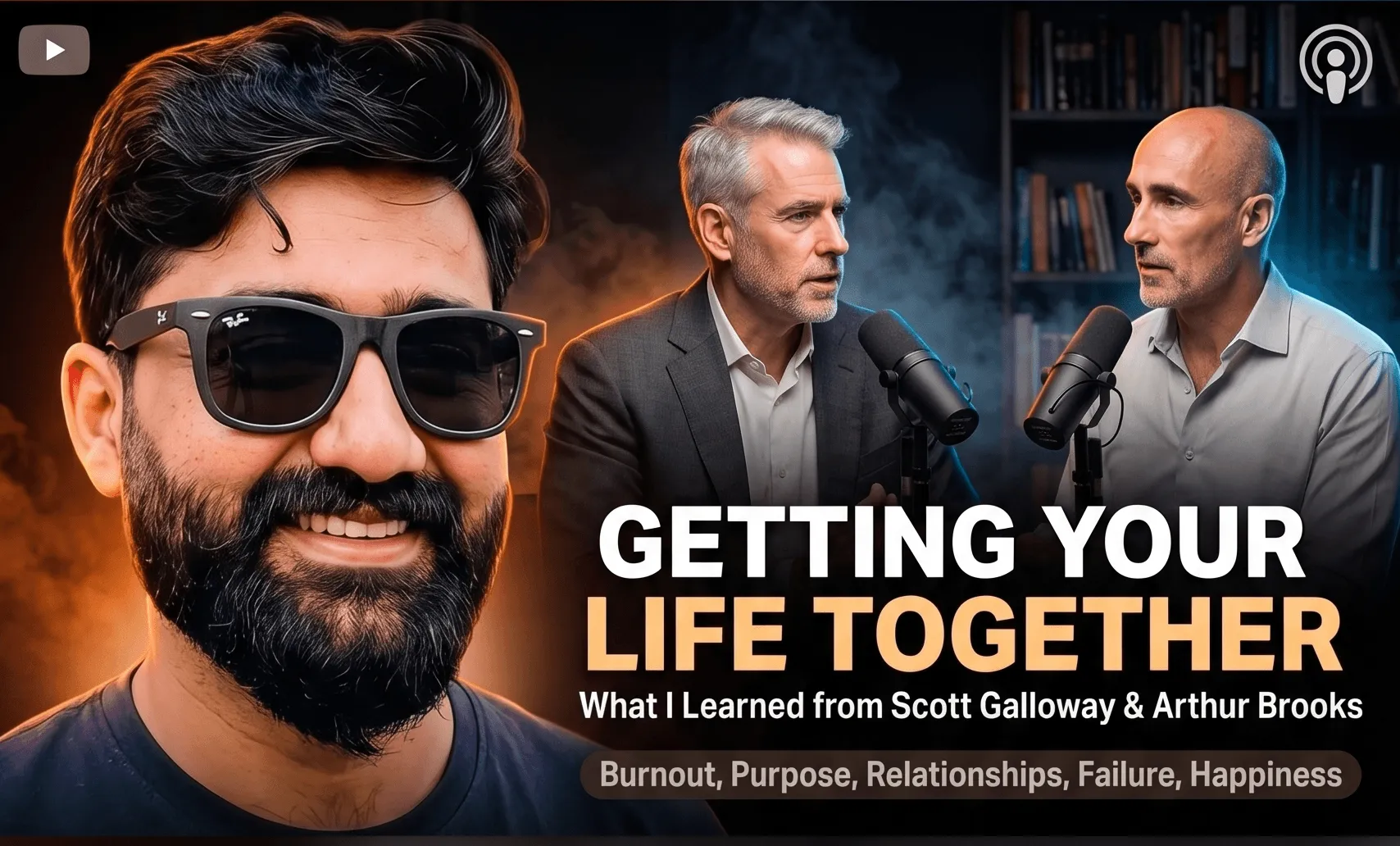
Few conversations cut through the noise around artificial intelligence, geopolitics, and modern masculinity quite like this one. In a wide-ranging discussion, host Steven Bartlett sat down with NYU professor, author, and entrepreneur Scott Galloway to unpack some of the most consequential, and uncomfortable, questions of our time: Is AI really coming for our jobs? Can we trust the men building it? And what does it actually take to build a meaningful life in an age of exponential technology?
Below is a breakdown of the biggest ideas from the episode.
The Two Biggest "Brand Collapses" of the Last 18 Months
Galloway opened with a bold claim: two brands have fallen further and faster than almost anything else in recent memory. The first is the United States' reputation on the world stage. The second is artificial intelligence itself: and, by extension, its most visible spokesperson, Sam Altman.
His argument is that perception of AI now tracks almost perfectly with income. People earning six figures or more tend to see AI as a wealth-creating innovation, because it's fueling their portfolios. Everyone else is left dealing with rising electricity bills, no access to invest in the companies driving the boom, and executives who seem tone-deaf about the disconnect.
Is AI Actually Destroying Jobs?
This is where the conversation got genuinely provocative. Galloway pushed back hard on the "job apocalypse" narrative pushed by some AI CEOs, arguing that catastrophizing is often just a fundraising tactic. A way of making the technology sound so world-altering that eye-watering valuations feel justified.
He pointed to the data: US unemployment sits around 4.5%, new business formation has doubled over the past decade, and even radiology, long considered "ground zero" for AI-driven job loss, is seeing rising job listings, because diagnosis and treatment planning matter more than image-scanning. Coding job listings are up too, as AI expands who can build a startup rather than replacing builders entirely.
That said, he wasn't naively optimistic. He was clear that certain roles, customer service, legal support work, long-haul trucking, are genuinely at risk, and that AI is already allowing companies to do more with fewer people. His own example: a legal team that once needed several analysts or junior lawyers can increasingly be replaced by one person paired with AI tools. His warning is that if unemployment ever spiked toward 20%, especially among young men, the risk isn't just economic, it's social unrest.
Sam Altman, Elon Musk, and the "New Jesus Christ" Problem
One of the most striking parts of the conversation was Galloway's take on why we keep placing tech founders on a pedestal, and why we keep getting burned. As religious attendance declined over recent decades, he argued, technology quietly became the closest thing many people have to a belief system: something mysterious, authoritative, and trusted almost like a form of prayer.
That's why, in his view, founders like Sam Altman get cast first as saviors and later as villains. The "Anakin to Vader" arc, as he called it, happens because these executives are simply doing their job, maximizing shareholder value, not acting as guardians of the public interest. His conclusion isn't that individual CEOs are uniquely evil; it's that society has stopped demanding meaningful regulation, and that the responsibility belongs with elected officials, not tech billionaires.
On Elon Musk specifically, Galloway was similarly skeptical of some of the more dramatic predictions (like humanoid robots replacing surgeons) while still crediting Musk's genuine achievements, starlink and SpaceX's reusable rockets among them. His read on Tesla is that it's a strong car company trading at a valuation built more on storytelling than fundamentals, especially as competitors like BYD close the gap.
The Billionaire "Go-Bag" Phenomenon
Perhaps the most eyebrow-raising segment covered what Galloway called a quiet strain of nihilism among the ultra-wealthy: private contingency plans, bunkers, pilots on standby, escape routes to places like New Zealand, in case of societal collapse. His pointed critique was that this kind of disaster-proofing reflects a broader disconnection: many of the wealthiest people are so insulated from public infrastructure, healthcare, and education that they've stopped being personally invested in fixing them.
The Real Skills of the Future
Asked what young people should actually be learning, Galloway didn't point to coding or any single technical skill. His answer was storytelling, the ability to turn data into a compelling narrative, combined with strong relationship-building, since he believes AI will eventually commoditize most technical capabilities.
Bartlett added a layer to this: the ability to tolerate rejection. Both agreed that frictionless digital relationships are quietly eroding resilience, particularly among young men, and that learning to hear "no", in dating, job applications, and friendships, remains one of the most underrated life skills.
The Middle East, Misplaced Confidence, and "Strategic Incompetence"
The discussion also turned to the recent conflict involving Iran, which Galloway summarized as a case of "operational excellence and strategic incompetence": a military action that may have had some initial justification but was undermined by poor coordination with allies, a gutted diplomatic corps, and shifting objectives. He argued that regardless of the military outcome, the reputational cost to the US has been significant, particularly as markets and everyday consumers seem largely disconnected from the human and economic toll.
Where's the Value Right Now?
On investing, Galloway's advice was refreshingly unglamorous: diversify aggressively, never put more than a small percentage of net worth into any single asset, and automate savings so money never touches your hands long enough to be spent. He was skeptical that AI will necessarily create a small handful of trillion-dollar winners the way e-commerce or social media did, comparing it instead to vaccines or jet travel: significant for society, but not necessarily a goldmine for shareholders, especially with cheap open-weight models emerging from China.
The Personal Side: Fatherhood, Grief, and Purpose
The conversation closed on a more personal note. Galloway spoke candidly about finding real purpose not in career wins but in fatherhood. Describing it as the one relationship where he'll never get a positive "return" on his investment, and why that's exactly the point. He also spoke movingly about grief following his mother's death, describing grief not as a problem to be solved but as the necessary cost of having loved someone deeply.
Source & Credit
This article is a recap and reflection on the conversation between host Steven Bartlett and guest Scott Galloway on The Diary of a CEO podcast.
All credit for the original ideas and discussion belongs to Steven Bartlett, Scott Galloway, and The Diary of a CEO team.
Originally published on workflox.net
Our take
This is a summary of a long interview, and the opinions in it belong to Scott Galloway. We include it because the trust question is commercial for anyone who sells AI products. If customers are more sceptical of AI than they were a year ago, then a promise is worth less and evidence is worth more. In practice that means showing how an assistant was tested, what it is allowed to do, where a person steps in, and what happens when it is wrong. Vendors who can show that are easier to buy from than vendors who describe a model. The broader arguments about markets, politics and individual technology leaders are Galloway's to make, and we would encourage you to listen to the full episode for the context we have compressed here.
Source & Credit
This article summarises Scott Galloway's conversation with Steven Bartlett on The Diary of a CEO, in the episode titled "Scott Galloway: AI Wasn't Built For You. The Rich Don't Need You Anymore", released on 4 May 2026. All ideas attributed to Galloway are his. The summary and the commentary are ours.
Frequently Asked Questions
Is AI actually destroying jobs right now in 2026?
According to Scott Galloway on The Diary of a CEO, the 'job apocalypse' narrative is often exaggerated as a fundraising tactic, but the risk is real in specific roles. US unemployment is around 4.5%, and new business formation has doubled in a decade. However, customer service, legal support, and logistics roles are genuinely at risk. AI is letting companies do more with fewer people. A legal team that once needed 4 analysts can now operate with 1 person and AI tools.
Why do people keep blindly trusting Sam Altman and Elon Musk on AI?
Scott Galloway argues that as religious attendance has declined, technology has become society's closest thing to a belief system. Founders like Sam Altman get cast first as saviors and then as villains because society expects them to act as public guardians, but they are simply doing their job: maximizing shareholder value. The responsibility for regulation belongs to elected officials, not tech billionaires.
What skills will actually be valuable in the age of AI?
Galloway's answer is storytelling, the ability to turn data into a compelling narrative, combined with relationship-building. He believes AI will eventually commoditize most technical capabilities. Steven Bartlett adds that the ability to tolerate rejection is also critically underrated, as frictionless digital life is eroding resilience, particularly among young men.
Is investing in AI companies a good idea in 2026?
Galloway is skeptical that AI will create a small handful of trillion-dollar winners the way social media did. He compares it to vaccines or jet travel. Significant for society but not necessarily a goldmine for public shareholders, especially with cheap open-weight models emerging from China. His advice: diversify aggressively and automate savings.
How can WORKFLOX help businesses adapt to AI-driven market changes?
WORKFLOX builds the AI-powered products and automation systems businesses need to stay competitive, from custom LLM integrations and AI agents to enterprise automation workflows using n8n. Whether you need to automate a department, build a new AI-native product, or modernize legacy infrastructure, we deliver end-to-end.
Related services
Related Articles